
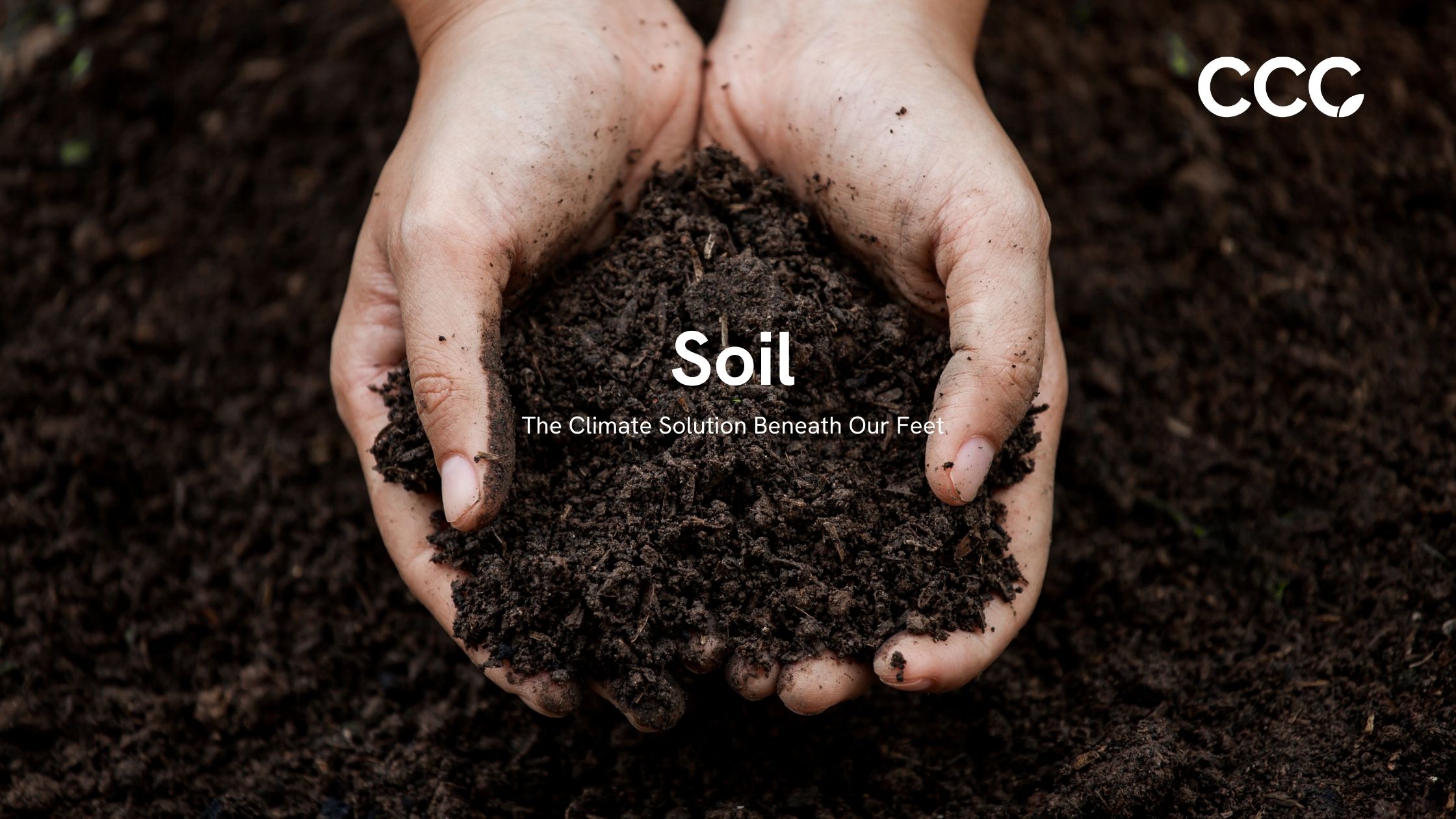
Soil is not just dirt. It is life beneath our feet.
The power of living soil
Why Soil Organic Carbon is central to Carbon Farming and Climate Action
Beneath our feet lies one of the most complex and powerful ecosystems on Earth.
Yet most of the time, we simply call it dirt.
In reality, soil is far more than earth. It is a living system — a dynamic biological environment shaped by life, death, transformation, and regeneration over centuries.
It is composed of minerals, water, air, and something even more extraordinary: the remains of life itself, plant roots, fungi, bacteria, microorganisms, organic residues from plants and animals that once lived.
Together, they form what scientists call soil organic matter, the living engine of soil ecosystems.
At the heart of this system lies Soil Organic Carbon (SOC).
SOC is more than a scientific measurement. It is a signal that life has passed through the soil and continues to shape it. Every gram of carbon stored underground represents biological activity, ecological cycles, and the quiet work of nature rebuilding fertility.
For scientists, soil carbon is one of the clearest indicators of soil health and ecosystem vitality. But its importance goes far beyond agriculture.
Soil carbon also reflects something larger: the relationship between life on Earth and the atmosphere above it.
Because the same carbon that lives in soil is also the carbon that drives climate change.
And here lies one of the most promising opportunities of our time.
Healthy soils have the capacity to capture and store enormous amounts of atmospheric carbon, transforming agricultural landscapes into powerful climate allies.
This is the foundation of carbon farming — and one of the emerging pillars of the global carbon credit economy.
Understanding soil, therefore, is not only an agricultural challenge.
It is a climate challenge, a scientific challenge, and increasingly, a financial opportunity.
How can we manage land in ways that increase this capacity?
This is the core idea behind carbon farming — a set of agricultural practices designed to increase soil organic carbon while maintaining productive and resilient ecosystems.
Practices such as:
cover crops
reduced tillage
organic amendments
diversified crop rotations
regenerative vineyard management
can gradually increase Soil Organic Carbon (SOC) levels in agricultural soils.
When properly monitored and verified, these increases in soil carbon can contribute to carbon sequestration, helping remove carbon dioxide from the atmosphere and store it underground.
This is why carbon farming is increasingly recognized as a key nature-based climate solution and an emerging component of carbon credit systems.
But unlocking this potential requires something essential: reliable data.
The Scientific Challenge: Measuring Soil Carbon
Determining the state of carbon in soils remains one of the major scientific challenges in climate and agricultural research.
Soil is highly heterogeneous. Its composition can vary significantly even across small distances due to differences in:
climate
vegetation
soil texture
land management practices
topography
Traditional soil sampling methods are often expensive, time-consuming, and difficult to scale globally. As a result, global estimates of soil organic carbon can vary considerably and are often based on approximations and models.
To improve our understanding of soil carbon dynamics, researchers increasingly combine multiple approaches, including:
remote sensing technologies
thematic soil mapping
multivariate statistical analysis
ecosystem modelling and simulations
These tools help scientists simulate how natural systems function and how soil carbon may evolve over time under different management practices.
Developing robust data management strategies and monitoring systems is essential for the credibility and scalability of carbon farming initiatives and carbon markets.
From Research to Practice: The LIFE VitiCaSe Project
Translating scientific understanding of soil carbon into real-world applications is a crucial step in advancing carbon farming.
One example of this effort is the LIFE VitiCaSe project, which explores sustainability and climate mitigation strategies within viticulture systems.
Vineyards offer a particularly interesting landscape for soil carbon research. Management decisions — such as vegetation cover between rows, soil disturbance, and organic inputs — can significantly influence soil organic carbon levels.
Projects like LIFE VitiCaSe aim to better understand:
how vineyard management practices affect soil organic carbon
how soil monitoring can support sustainable land management
how scientific data can inform climate-smart agricultural practices
By combining field measurements, environmental data, and modelling approaches, initiatives like LIFE VitiCaSe help bridge the gap between scientific research and practical land management.
These types of projects demonstrate how agriculture can contribute to climate mitigation while maintaining productive and resilient landscapes.
Soil as a Climate Opportunity
As carbon markets continue to evolve, soil is increasingly recognized as one of the most promising nature-based carbon sinks.
Healthy soils do not only support food production and ecosystems — they can also become a key component of climate strategies, regenerative agriculture, and carbon credit systems.
But realizing this potential requires collaboration between:
scientists
farmers
data specialists
climate policy experts
carbon market practitioners
Because ultimately, the future of carbon farming will depend on our ability to understand, measure, and manage the living systems beneath our feet.
Insights
Discover stories, research, and updates
Natural Capital Asset
16/03/2026
Carbon Farming: Turning Soil Health into Climate Action

Camera Traps
16/09/2025
Camera Trap: The Puma